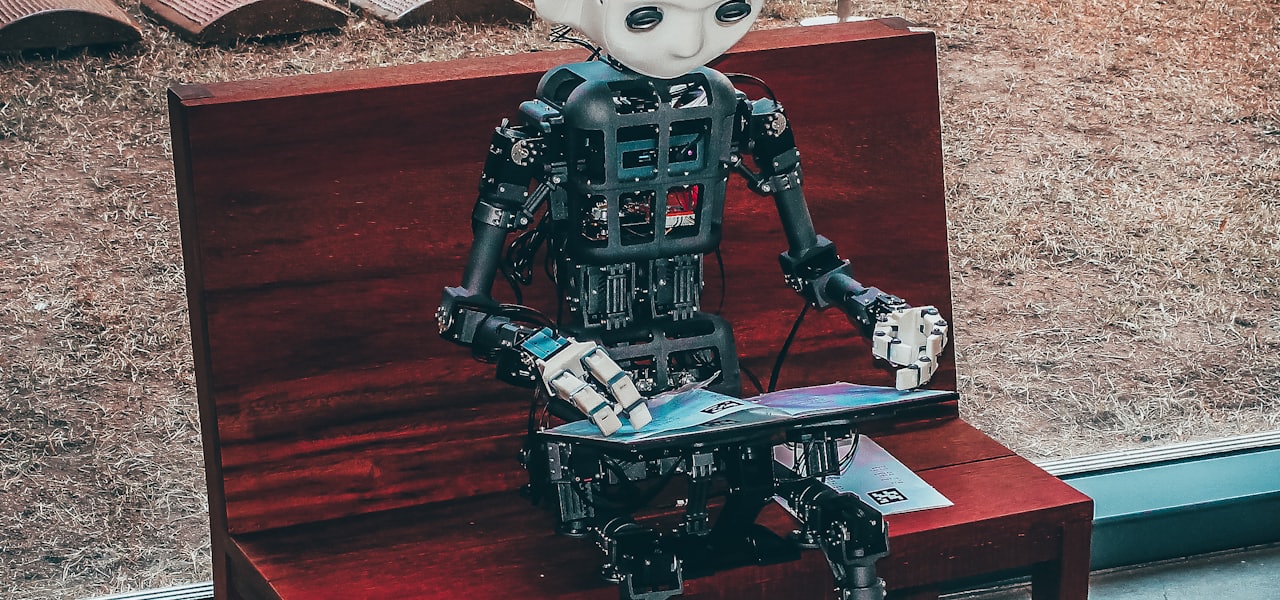
AI-assisted software development is the use of artificial intelligence (AI) to augment software development. It uses large language models (LLMs), AI agents and other AI technologies to assist software developers. It helps in a range of tasks of the software development life cycle, from code generation to debugging, editing, testing, UI design, understanding the code, and documentation. Agentic coding denotes the use of AI agents for software development. == Technologies == === Source code generation === Large language models trained or fine-tuned on source-code corpora can generate source code from natural-language descriptions, comments, or docstrings. Research on code-generation systems often evaluates generated programs by functional correctness, such as whether the output passes automated test cases, rather than by syntax alone. Such tools can be features or extensions of integrated development environments (IDEs). === Intelligent code completion === AI agents using pre-trained and fine-tuned LLMs can predict and suggest code completions based on context. According to Husein, Aburajouh & Catal in a 2025 literature review in Computer Standards & Interfaces, "LLMs significantly enhance code completion performance across several programming languages and contexts, and their capability to predict relevant code snippets based on context and partial input boosts developer productivity substantially." === Testing, debugging, code review and analysis === AI is used to automatically generate test cases, identify potential bugs and security vulnerabilities, and suggest fixes. AI can also be used to perform static code analysis and suggest potential performance improvements. == Limitations == Both ownership of and responsibility for AI-generated code is disputed. According to a report from the German Federal Office for Information Security, the use of AI coding assistants without careful oversight from experienced developers can introduce both minor and major security vulnerabilities, and any potential gain in productivity should be weighed against the cost of additional quality control and security measures. According to Deloitte, outputs from AI-assisted software development must be validated through a combination of automated testing, static analysis tools and human review, creating a governance layer to improve quality and accountability. == Vibe coding ==
Signal-to-noise ratio (imaging)
Signal-to-noise ratio (SNR) is used in imaging to characterize image quality. The sensitivity of a (digital or film) imaging system is typically described in the terms of the signal level that yields a threshold level of SNR. Industry standards define sensitivity in terms of the ISO film speed equivalent, using SNR thresholds (at average scene luminance) of 40:1 for "excellent" image quality and 10:1 for "acceptable" image quality. SNR is sometimes quantified in decibels (dB) of signal power relative to noise power, though in the imaging field the concept of "power" is sometimes taken to be the power of a voltage signal proportional to optical power; so a 20 dB SNR may mean either 10:1 or 100:1 optical power, depending on which definition is in use. == Definition of SNR == Traditionally, SNR is defined to be the ratio of the average signal value μ s i g {\displaystyle \mu _{\mathrm {sig} }} to the standard deviation of the signal σ s i g {\displaystyle \sigma _{\mathrm {sig} }} : S N R = μ s i g σ s i g {\displaystyle \mathrm {SNR} ={\frac {\mu _{\mathrm {sig} }}{\sigma _{\mathrm {sig} }}}} when the signal is an optical intensity, or as the square of this value if the signal and noise are viewed as amplitudes (field quantities).
Media preservation
Preservation of documents, pictures, recordings, digital content, etc., is a major aspect of archival science. It is also an important consideration for people who are creating time capsules, family history, historical documents, scrapbooks and family trees. Common storage media are not permanent, and there are few reliable methods of preserving documents and pictures for the future. == Paper/prints (photos) == Color negatives and ordinary color prints may fade away to nothing in a relatively short period if not stored and handled properly. This happens even if the negatives and prints are kept in the dark, because ambient light is not the determining factor, but heat and humidity are. The color degradation is the result of the dyes used in the color processes. Because color processing results in a less stable image than traditional black-and-white processing, black-and-white pictures from the 1920s are more likely to survive long-term than color films and photographs from after the middle 20th century. Black-and-white photographic films using silver halide emulsions are the only film types that have proven to last for archival storage. The determining factors for longevity include the film base type, proper processing (develop, stop, fix and wash) and proper storage. Early films used a Cellulose nitrate base which was prone to decomposition and highly flammable. Nitrate film was replaced with acetate-base films. These Cellulose acetate films were later discovered to outgass acids (also referred to as vinegar syndrome). Acetate films were replaced in the early 1980s by polyester film base materials which have been determined to be more stable than film stocks with a nitrate or acetate base. Color prints made on most inkjet printers look very good at first but they have a very short lifespan, measured in months rather than in years. Even prints from commercial photo labs will start to fade in a matter of years if not processed properly and stored in cool, dry environments. == Documents/books == With documents for which the media are not so critical as what the documents contain, the information in documents can be copied by using photocopiers and image scanners. Books and manuscripts can also have their information saved without destruction by using a book scanner. Where the medium itself needs to be preserved, for example if a document is a crayon sketch by a famous artist on paper, a complex process of preservation may be used. Depending on the condition and importance of the item this can include gluing the media onto more stable media, or protective enclosing of the media. Polyester sleeves, acid-free folders, and pH buffered document boxes are common supportive protective enclosures whose selection must match the media's chemical and physical properties. Other considerations in preserving paper/books are: Damaging light, particularly UV light, which fades and destroys media over time by breaking down the molecules. Atmosphere contains small traces of sulfur dioxide and nitric acid which turn media yellow and break the fibers down. Humidity and moisture also aid in the breakdown of media. If there is too much, the document can be attacked by bacteria, and if too little, cellulose material breaks down. Temperature, particularly elevated ones, can destroy some media. Low temperatures can cause the water to form crystals which expands destroying the structure of paper-based documents. == Online photo albums == Although there are many websites that allow the upload of photographs and videos, digital preservation for the long-term is still considered an issue. There is a lack of confidence that such websites are capable of storing data for long periods of time (ex. 50 years) without data degradation or loss. == Optical media - CD, DVD, Blu-ray, M-Disc == Write-once optical media, such as CD-Rs and DVD-Rs, typically contain an organic dye that distinguishes data reading from data writing based on the dye's transparency along the disc. Conventional CDs and DVDs have finite shelf-life due to natural degradation of the dye; the newer M-DISC uses inorganic material technology to produce molded DVDs and Blu-Rays (up to 3-layer 100GB BDXL) with a claimed lifespan of 100-1000 years if stored correctly with most BD & BDXL rated read/writers enabling the higher power mode for the M-Disc format after 2011. The National Archives and Records Administration lists published life expectancies to be 10 or 25 years or more for normal CDs and DVDs and conservative life expectancies to be between 2 and 5 years. Storage environments, such as temperature and humidity, as well as handling conditions such as frequency of media use and compatibility between the recorder and media, affect media shelf-life. Improvements in media storage and migrations to new recording technologies can make certain formats obsolete within their respective lifespan. Technologists have pointed to internet streaming services, where services such as video-on-demand have contributed to the 33 percent decline in DVD sales the past 5 years, as a challenge for digital preservation. == Magnetic media - video cassettes, tapes, hard drives == Magnetic media such as audio and video tape and floppy disks also have limited life spans. Audio and video tapes require specific care and handling to ensure that the recorded information will be preserved. For information that must be preserved indefinitely, periodic transcription from old media to new ones is necessary, not only because the media are unstable but also because the recording technology may become obsolete. Magnetic media also deteriorates naturally with typical shelf lives between 10 and 20 years. Magnetic tape can degrade from binder hydrolysis or magnetic remanence decay. Binder hydrolysis, also known as sticky-shed syndrome, refers to the breakdown of binder, or glue, that holds the magnetic particles to the polyester base of the tape. Tapes which have been stored in hot, humid conditions are particularly vulnerable to this phenomenon and may suffer from accelerated degradation. Severe binder can cause the magnetic material to fall off or sheds from the base, leaving a pile of dust and clear backing. Archivists can bake the tape, which evaporates water molecules on the tape, to temporarily restore the binder before making a copy. Magnetic tape can also be destabilized by magnetic remanence decay, which refers to the weakening of the tape's magnetization over time. This weakens the affected tape's readability, leading to reduced sound clarity and volume or picture hue and contrast. Baking the tape will not restore magnetization. Media at risk include recorded media such as master audio recordings of symphonies and videotape recordings of the news gathered over the last 40 years. Threats to media that must be considered when archiving important record media include accidental erasure, physical loss due to disasters such as fires and floods, and media degradation. Along with the actual media being degraded over the years, the machines that are available to play back or reproduce the audio sources are becoming archaic themselves. Manufacturers and their support (parts, technical updates) for their machines have disappeared throughout the years. Even if the medium is vaulted and archived correctly, the mechanical properties of the machines have deteriorated to the point that they could do more harm than good to the tape being played. Many major film studios are now backing up their libraries by converting them to electronic media files, such as .AIFF or .WAV-based files via digital audio workstations. That way, even if the digital platform manufacturer goes out of business or no longer supports their product, the files can still be played on any common computer. There is a detailed process that must take place previous to the final archival product now that a digital solution is in place. Sample rates and their conversion and reference speed are both critical in this process. In floppy disks, the lubricants inside the plastic jackets of many older floppies promote the decay of the magnetic medium. Also, the alignment of the magnetic particles of the disk substrate may gradually degrade, leading to a loss of formatting and data. Early laser disk media were prone to degradation as the layers of the disk substrate were bonded with an adhesive that was vulnerable to decay and would crumble over time. This would lead the different layers of the disk to peel apart, damaging the pitted data surface and rendering the disk unreadable.
IAmAnas
#IAmAnas (I Am Anas) is a Twitter hashtag and social media campaign that started in 2015. Users tweeted to express support for the undercover investigative works of Ghanaian journalist Anas Aremeyaw Anas. The campaign restarted in 2018 when the Ghanaian MP and financier of the New Patriotic Party, Kennedy Agyapong, announced his intention to reveal the identity of Anas following the journalist's exposé of corruption at the Ghana Football Association. Anas maintains that "being anonymous has always been his secret weapon." Pictures purported to be of Anas were first released by a TV station owned by Agyapong, and were quickly picked up by other media houses. At least one person, a Dutch-Brazilian model, has claimed ownership of one picture that was released, and has threatened legal action against Agyapong for possibly putting his life in danger. In response to Agyapong, social media users retweeted photos of themselves, random people, or even comic images of entities that resemble the trademark covered face of Anas. When the hashtag first began in 2015, along with other popular uses of the journalist's name, Elizabeth Ohene wrote an article about Ghanaians use of humour in response to dealing with the expose of government corruption. "I do not know when these words will make it into Wikipedia or the Oxford English Dictionary but for the moment you can take it from me that: To go undercover is to anas, to make secret recordings is to anas-anas, to wear disguises is to do an anas, to be caught in the act is to be anased. To have someone exposed taking bribes is to have that person being given the full Anas Aremeyaw Anas."
WebGL
WebGL (short for Web Graphics Library) is a JavaScript API for rendering interactive 2D and 3D graphics within any compatible web browser without the use of plug-ins. WebGL is fully integrated with other web standards, allowing GPU-accelerated usage of physics, image processing, and effects in the HTML canvas. WebGL elements can be mixed with other HTML elements and composited with other parts of the page or page background. WebGL programs consist of control code written in JavaScript, and shader code written in OpenGL ES Shading Language (GLSL ES, sometimes referred to as ESSL), a language similar to C or C++. WebGL code is executed on a computer's GPU. WebGL is designed and maintained by the non-profit Khronos Group. On February 9, 2022, Khronos Group announced WebGL 2.0 support from all major browsers. From 2024, a new graphics API, WebGPU, is being developed to supersede WebGL. WebGPU provides extended capabilities, a more modern interface, and direct GPU access, which is useful for demanding graphics as well as AI applications. == Design == WebGL 1.0 is based on OpenGL ES 2.0 and provides an API for 3D graphics. It uses the HTML5 canvas element and is accessed using Document Object Model (DOM) interfaces. WebGL 2.0 is based on OpenGL ES 3.0. It guarantees the availability of many optional extensions of WebGL 1.0, and exposes new APIs. Automatic memory management is provided implicitly by JavaScript. Like OpenGL ES 2.0, WebGL lacks the fixed-function APIs introduced in OpenGL 1.0 and deprecated in OpenGL 3.0. This functionality, if required, has to be implemented by the developer using shader code and JavaScript. Shaders in WebGL are written in GLSL and passed to the WebGL API as text strings. The WebGL implementation compiles these strings to GPU code. This code is executed for each vertex sent through the API and for each pixel rasterized to the screen. == History == WebGL evolved out of the Canvas 3D experiments started by Vladimir Vukićević at Mozilla. Vukićević first demonstrated a Canvas 3D prototype in 2006. By the end of 2007, both Mozilla and Opera had made their own separate implementations. In early 2009, the non-profit technology consortium Khronos Group started the WebGL Working Group, with initial participation from Apple, Google, Mozilla, Opera, and others. Version 1.0 of the WebGL specification was released March 2011. An early application of WebGL was Zygote Body. In November 2012 Autodesk announced that they ported most of their applications to the cloud running on local WebGL clients. These applications included Autodesk Fusion and AutoCAD. Development of the WebGL 2 specification started in 2013 and finished in January 2017. The specification is based on OpenGL ES 3.0. First implementations are in Firefox 51, Chrome 56 and Opera 43. == Implementations == === Almost Native Graphics Layer Engine === Almost Native Graphics Layer Engine (ANGLE) is an open source graphic engine which implements WebGL 1.0 (2.0 which closely conforms to ES 3.0) and OpenGL ES 2.0 and 3.0 standards. It is a default backend for both Google Chrome and Mozilla Firefox on Windows platforms and works by translating WebGL and OpenGL calls to available platform-specific APIs. ANGLE currently provides access to OpenGL ES 2.0 and 3.0 to desktop OpenGL, OpenGL ES, Direct3D 9, and Direct3D 11 APIs. ″[Google] Chrome uses ANGLE for all graphics rendering on Windows, including the accelerated Canvas2D implementation and the Native Client sandbox environment.″ == Software == WebGL is widely supported by modern browsers. However, its availability depends on other factors, too, like whether the GPU supports it. The official WebGL website offers a simple test page. More detailed information (like what renderer the browser uses, and what extensions are available) can be found at third-party websites. === Desktop browsers === Source: Google Chrome – WebGL 1.0 has been enabled on all platforms that have a capable graphics card with updated drivers since version 9, released in February 2011. By default on Windows, Chrome uses the ANGLE (Almost Native Graphics Layer Engine) renderer to translate OpenGL ES to Direct X 9.0c or 11.0, which have better driver support. However, on Linux and Mac OS X, the default renderer is OpenGL. It is also possible to force OpenGL as the renderer on Windows. Since September 2013, Chrome also has a newer Direct3D 11 renderer, which requires a newer graphics card. Chrome 56+ supports WebGL 2.0. Firefox – WebGL 1.0 has been enabled on all platforms that have a capable graphics card with updated drivers since version 4.0. Since 2013 Firefox also uses DirectX on the Windows platform via ANGLE. Firefox 51+ supports WebGL 2.0. Safari – Safari 6.0 and newer versions installed on OS X Mountain Lion, Mac OS X Lion and Safari 5.1 on Mac OS X Snow Leopard implemented support for WebGL 1.0, which was disabled by default before Safari 8.0. Safari version 12 (available in MacOS Mojave) has available support for WebGL 2.0 as an "Experimental" feature. Safari 15 enables WebGL 2.0 for all users. Opera – WebGL 1.0 has been implemented in Opera 11 and 12, but was disabled by default in 2014. Opera 43+ supports WebGL 2.0. Internet Explorer – WebGL 1.0 is partially supported in Internet Explorer 11. Internet Explorer initially failed most of the official WebGL conformance tests, but Microsoft later released several updates. The latest 0.94 WebGL engine currently passes ≈97% of Khronos tests. WebGL support can also be manually added to earlier versions of Internet Explorer using third-party plugins such as IEWebGL. Microsoft Edge – For Microsoft Edge Legacy, the initial stable release supports WebGL version 0.95 (context name: "experimental-webgl") with an open source GLSL to HLSL transpiler. Version 10240+ supports WebGL 1.0 as prefixed. Latest Chromium-based Edge supports WebGL 2.0. === Mobile browsers === Google Chrome – WebGL 1.0 is supported on Android as of Chrome 25. WebGL 2.0 is supported on Android as of Chrome 58. Chrome is used for the Android system webview as of Android 5. Firefox for mobile – WebGL 1.0 is available for Android devices since Firefox 4. Safari on iOS – WebGL 1.0 is available for mobile Safari in iOS 8. WebGL 2.0 is available for mobile Safari in iOS 15. Microsoft Edge – Prefixed WebGL 1.0 was available on Windows 10 Mobile.. Latest Chromium-based Edge supports WebGL 2.0. Opera Mobile – Opera Mobile 12 supports WebGL 1.0 (on Android only). Sailfish OS – WebGL 1.0 is supported in the default Sailfish browser. Tizen – WebGL 1.0 is supported == Tools and ecosystem == === Utilities === The low-level nature of the WebGL API, which provides little on its own to quickly create desirable 3D graphics, motivated the creation of higher-level libraries that abstract common operations (e.g. loading scene graphs and 3D objects in certain formats; applying linear transformations to shaders or view frustums). Some such libraries were ported to JavaScript from other languages. Examples of libraries that provide high-level features include A-Frame (VR), BabylonJS, PlayCanvas, three.js, OSG.JS, Google’s model-viewer and CopperLicht. Web3D also made a project called X3DOM to make X3D and VRML content run on WebGL. === Games === There has been an emergence of 2D and 3D game engines for WebGL, such as Unreal Engine 4 and Unity. The Stage3D/Flash-based Away3D high-level library also has a port to WebGL via TypeScript. A more light-weight utility library that provides just the vector and matrix math utilities for shaders is sylvester.js. It is sometimes used in conjunction with a WebGL specific extension called glUtils.js. There are also some 2D libraries built atop WebGL, like Cocos2d-x or Pixi.js, which were implemented this way for performance reasons in a move that parallels what happened with the Starling Framework over Stage3D in the Flash world. The WebGL-based 2D libraries fall back to HTML5 canvas when WebGL is not available. Removing the rendering bottleneck by giving almost direct access to the GPU has exposed performance limitations in the JavaScript implementations. Some were addressed by asm.js and WebAssembly (similarly, the introduction of Stage3D exposed performance problems within ActionScript, which were addressed by projects like CrossBridge). === Content creation === As with any other graphics API, creating content for WebGL scenes requires using a 3D content creation tool and exporting the scene to a format that is readable by the viewer or helper library. Desktop 3D authoring software such as Blender, Autodesk Maya or SimLab Composer can be used for this purpose. In particular, Blend4Web allows a WebGL scene to be authored entirely in Blender and exported to a browser with a single click, even as a standalone web page. There are also some WebGL-specific software such as CopperCube and the online WebGL-based editor Clara.io. Online platforms such as Sketchfab and Clara.io allow users to directly upload their 3D models
Render layers
When creating computer-generated imagery, final scenes appearing in movies and television productions are usually produced by rendering more than one "layer" or "pass," which are multiple images designed to be put together through digital compositing to form a completed frame. Rendering in passes is based on a traditions in motion control photography which predate CGI. As an example, for a visual effects shot, a camera could be programmed to move past a physical model of a spaceship in one pass to film the fully lit beauty pass of the ship, and then to repeat exactly the same camera move passing the ship again to photograph additional elements such as the illuminated windows in the ship or its thrusters. Once all of the passes were filmed, they could then be optically printed together to form a completed shot. The terms render layers and render passes are sometimes used interchangeably. However, rendering in layers refers specifically to separating different objects into separate images, such as a layer each for foreground characters, sets, distant landscape, and sky. On the other hand, rendering in passes refers to separating out different aspects of the scene, such as shadows, highlights, or reflections, into separate images.
Digital edition
A digital edition is an online magazine or online newspaper delivered in electronic form which is formatted identically to the print version. Digital editions are often called digital facsimiles to underline the likeness to the print version. Digital editions have the benefit of reduced cost to the publisher and reader by avoiding the time and the expense to print and deliver paper edition. This format is considered more environmentally friendly due to the reduction of paper and energy use. These editions also often feature interactive elements such as hyperlinks both within the publication itself and to other internet resources, search option and bookmarking, and can also incorporate multimedia such as video or animation to enhance articles themselves or for advertisement purposes. Some delivery methods also include animation and sound effects that replicate turning of the page to further enhance the experience of their print counterparts. Magazine publishers have traditionally relied on two revenue sources: selling ads and selling magazines. Additionally some publishers are using other electronic publication methods such as RSS to reach out to readers and inform them when new digital editions are available. Current technologies are generally either reader-based, requiring a download of an application and subsequent download of each edition, or browser-based, often using Macromedia Flash, requiring no application download (such as Adobe Acrobat). Some application-based readers allow users to access editions while not connected to internet. Dedicated hardware such as the Amazon Kindle and the iPad is also available for reading digital editions of select books, popular national magazines such as Time, The Atlantic, and Forbes and popular national newspapers such as the New York Times, Wall Street Journal, and Washington Post. Archives of print newspapers, in some cases dating hundreds of years back, are being digitized and made available online. Google is indexing existing digital archives produced by the newspapers themselves or by third parties. Newspaper and magazine archival began with microform film formats solving the problem of efficiently storing and preserving. This format, however, lacked accessibility. Many libraries, especially state libraries in the United States are archiving their collections digitally and converting existing microfilm to digital format. The Library of Congress provides project planning assistance and the National Endowment for the Humanities procures funding through grants from its National Digital Newspaper Program. Digital magazines, ezines, e-editions and emags are sometimes referred to as digital editions, however some of these formats are published only in digital format unlike digital editions which replicate a printed edition as well. == Digital magazines == Digital-replica magazines number in thousands—consumer and business publications, house magazines for associations, institutions and corporations – and conversion from print to digital was still increasing as of 2009. A 2008 report funded by digital-replica technology providers and auditing agencies counted 1,786 digital-replica editions having more than 7 million circulation among business-to-business publications, of which 230 editions were audited The same report counted 1,470 digital-replica editions of consumer magazines having 5.5 million digital circulation, of which 240 editions were audited. These authors estimated that by year end of 2009 there would be 8,000 digital magazines, having a combined distribution of more than 30 million people. Surveys have shown that, while not all subscribers prefer a digital edition, some do because of the environmental benefit and also because digital magazines are searchable and may easily be passed along or linked to. One such survey funded by a digital publisher reported on inputs from more than 30,000 subscribers to business, consumer and other digital magazines. == Digital magazine business models == === Reduced printing and distribution costs === The publishers' choice to save by moving some or all subscribers from print to digital is widely accepted. Oracle magazine, which has 176,000 of its 516,000 subscribers receiving digital according to its June 2009 BPA circulation statement, is said to be the most widely circulated digital edition of a business-to-business publication. Publishers who do this need to choose whether to make some issues all-digital, move some subscribers to digital edition, add some digital-only subscribers, or send all subscribers the digital edition. === Paid subscription revenue === In 2009, a major consumer magazine, PC Magazine, went all-digital, charging an annual subscription fee for its digital-replica edition. Many consumer magazines and newspapers are already available in eReader formats that are sold through booksellers. === Sponsorship and advertising revenue === Digital editions often carry special "front cover" advertising, or advertising on the email message alerting the subscriber of the digital edition. Publishers also produce special digital-only inserts and rich-media ads or advertorials. === Designed-for-digital issues === Another approach is to fully replace printed issues with digital ones, or to use digital editions for extra issues that would otherwise have to be printed.